

SE!ZING THE MOMENT
Why the world's oldest entertainment format still remains its most compelling.
By James Wallis
Games are having a moment. It’s a pretty big moment, to be honest: interactive media is on track to be the dominant entertainment form of the 21st century, if it isn’t already. Video games make more money than movies and the music industry put together. Games Workshop, a Nottingham company that makes toy soldiers and the games to play with them, is a £6bn FTSE100 business. Everyone has games on their phone, everyone knows what Candy Crush and GTA and Uno and Dungeons & Dragons are. Around the year 2020 we passed a tipping point where the majority of the population are ‘games natives’: games have always been part of mass-market entertainment for them, just another cultural form.
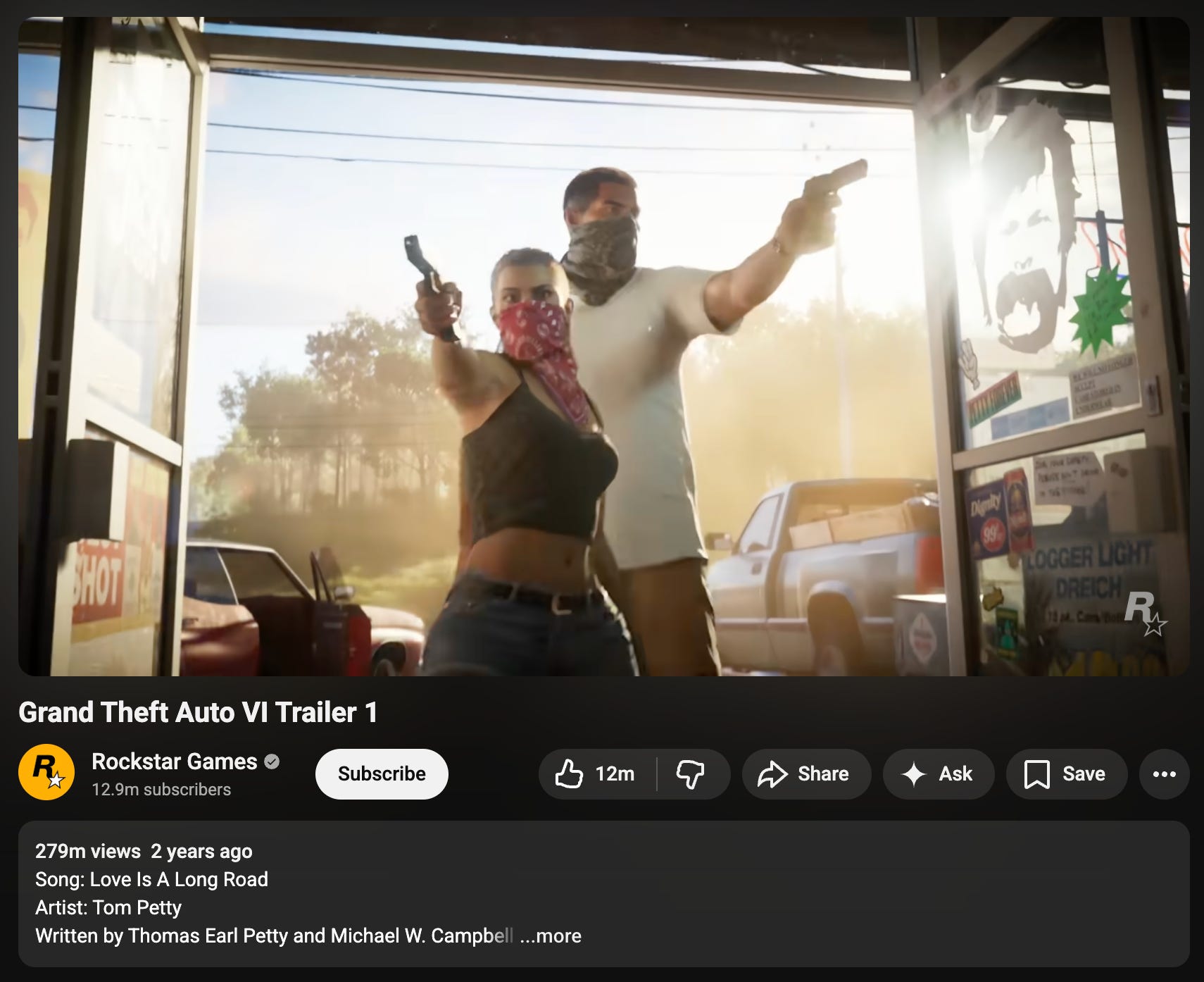
And yet games are still treated as a niche part of culture, something for kids and teens and adults who haven’t grown up. Newspapers still make jokes about geeks and shut-ins, the same way they did about people a hundred years ago who watched too many movies, or eighteenth century fans of novels. Serious creators don’t make games, it seems, or at least serious critics don’t play them. But games have been an integral part of human civilisation since the dawn of history, and this cultural disdain for them is very modern.
I spent many months last year working with Baby Teeth on a game for Chivas Regal alongside the F1 racing driver Charles Leclerc.. It's called Se!ze and it sets out to blend the best aspects of modern games with the elements that have given the greatest classics such staying power, as well as Charles' personal gaming preference for something quick enough to play again and again, while still rewarding strategic thinking moves ahead. It's been a fascinating chance to reflect on the human desire to play, and its role in history.
Rolling down the ages
We don’t know how old games are. North Americans were playing with dice around 12,000 years ago, not the six-sided variety familiar today but two-sided counters, thrown singly or together. Sadly, how they used them is lost to time. In fact there are many early games that we have no idea how to play today because they were invented before writing was. A pattern of holes carved into a rock eight thousand years ago could be a game board, or a simple abacus, or a calendar, or a way of making dumplings. Without rules, we have no idea. We don’t even have a proper set of rules for Senet.
The Egyptians were big games players, but Senet was their favourite. The first definite record of it is from 2600 BCE, though it may be five hundred years older. The game is a little like backgammon: two players throw dice (not really dice, flat sticks like the American ones), competing to move their five pieces off the board first. Originally it was an amusement or a gambling game, but by the time of the New Kingdom, a thousand years after its invention, it had acquired a new meaning. Now the pieces represented the journey of the soul through the underworld to the afterlife, and the game had become an important part of Egyptian culture. Scenes were painted on the walls of tombs showing the deceased playing Senet against an invisible foe – death itself. The pharaoh Tutankhamun, clearly a gamer, was buried with five different Senet sets.
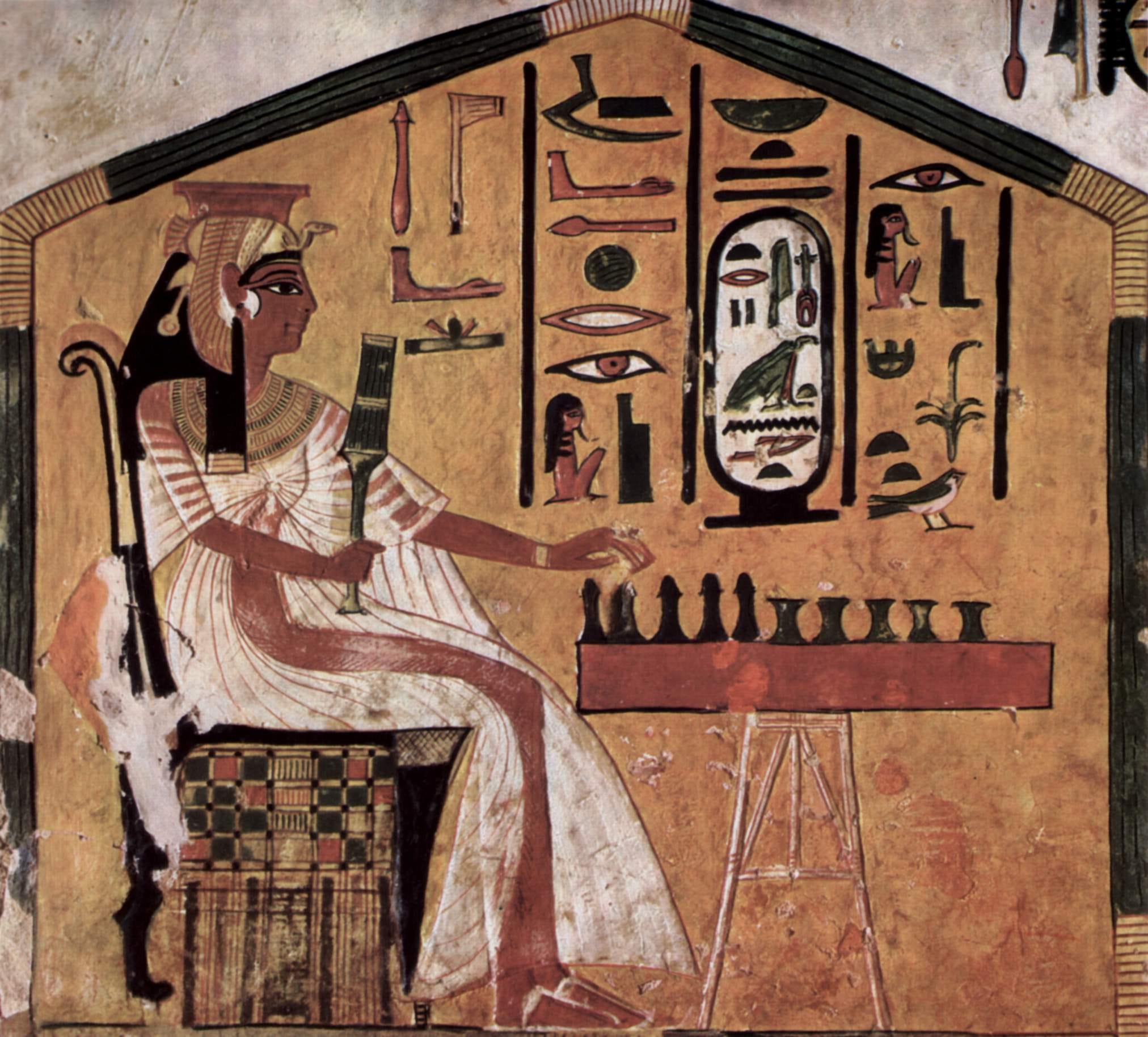
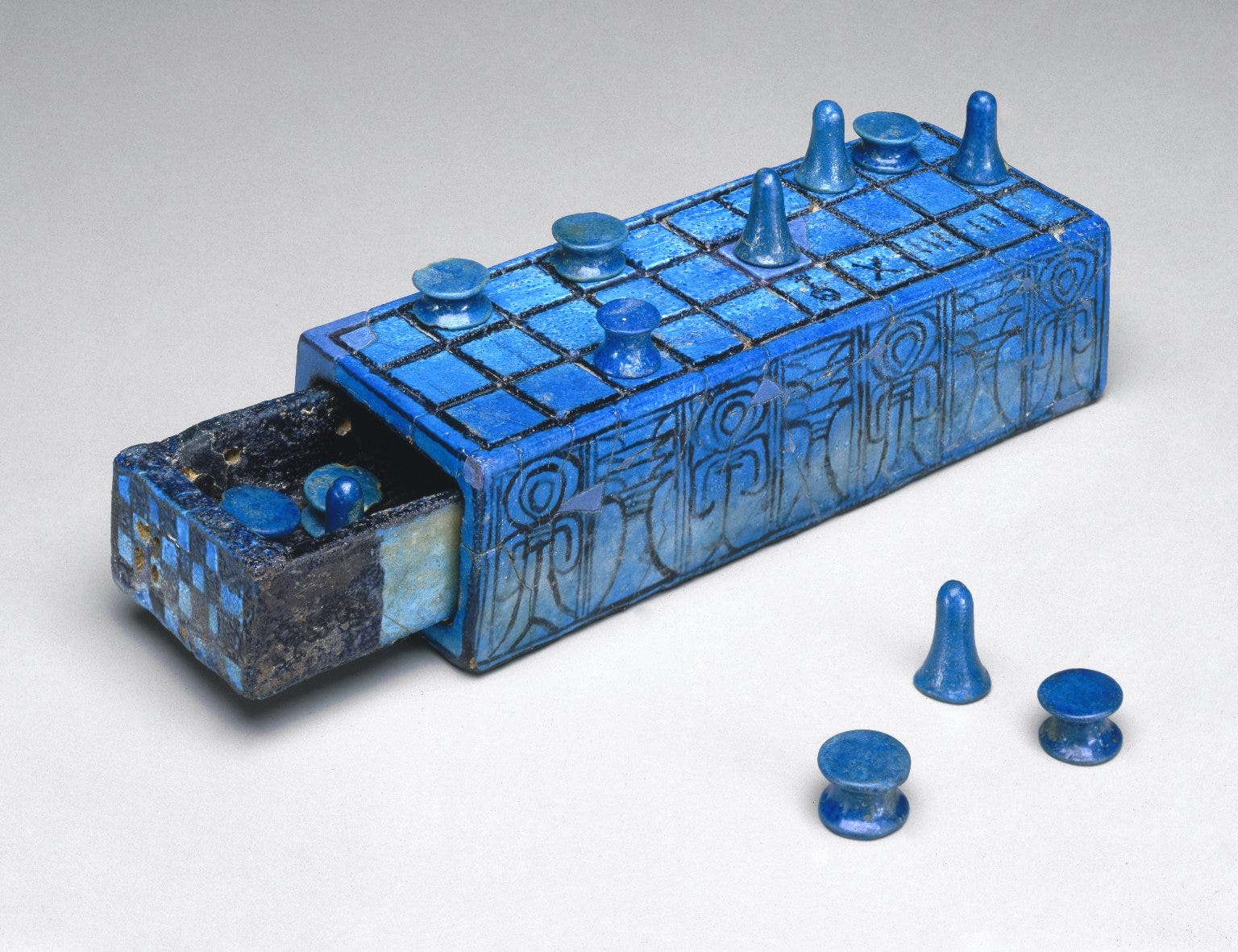
Games have always been used as a way to teach understanding, skills and behaviour, whether that’s basic maths and probability, or tactics, resource management and people skills, or how to accept defeat with grace. Senet is the first known example of a bigger purpose, perhaps the biggest, helping people to understand and come to terms with death. Games are the first and purest interactive form of culture: you have to be actively involved to be a part of the experience, to fully enjoy it and draw from its lessons. Watching the game being played is a very different thing.
The Egyptians played Senet for over two and a half thousand years, twice as long as chess has existed, but as their empire dwindled the game dwindled with it. Other games took its place, some based on it (the Royal Game of Ur), others from elsewhere in the world (Nine Men’s Morris). The Romans were huge games-players, and you can still see their game-boards scratched into the paving-stones of forums, in bath-houses, and even on the side of Charlemagne’s throne. The poet Ovid recommended playing games as a dating strategy: a close-fought game will make hearts beat faster, fingers brush against each across the board, and one sort of scoring can lead to another. Even then, anyone who thought games were all about winning was missing the bigger picture.
Games round the world
A country’s favourite game says a lot about its culture. The Russians have had a national obsession with chess since the 1920s: it was a central tenet of Soviet society. Dominoes is originally Chinese but its modern mainstay is in West Indian culture, where it’s played fast and loud. And when William Storey invented Whot!, a precursor to Uno, in Croydon in 1935, he could hardly have foreseen it would be adopted as the national card game of Nigeria.
The moment cultures put their stamp on a game, the games change. Most importantly, they acquire themes. Chess is a wargame, and may have been developed as a training tool for junior officers in India. Mancala, the great game of Africa, looks like an abstract game but it’s actually about sowing and harvesting crops, and should be played with seeds for counters. The Indian game Moksha Patam is about karma and the karmic cycle: the game is a trek through life but if one does a good deed (represented by a ladder) one moves upwards on the board; a bad deed (a snake) takes one back down. When the British Empire brought the game to Europe, early versions had simple moral lessons: a child who is kind is rewarded; a child who kicks a puppy is punished, and it was regarded as a children’s game. A few decades later the morals had gone but the snakes, the ladders and the juvenile audience remained: a simple game of chance, with no skill and few lessons. The American version went further, removing the only part that still carried any frisson of danger: they call it ‘Chutes and Ladders’.
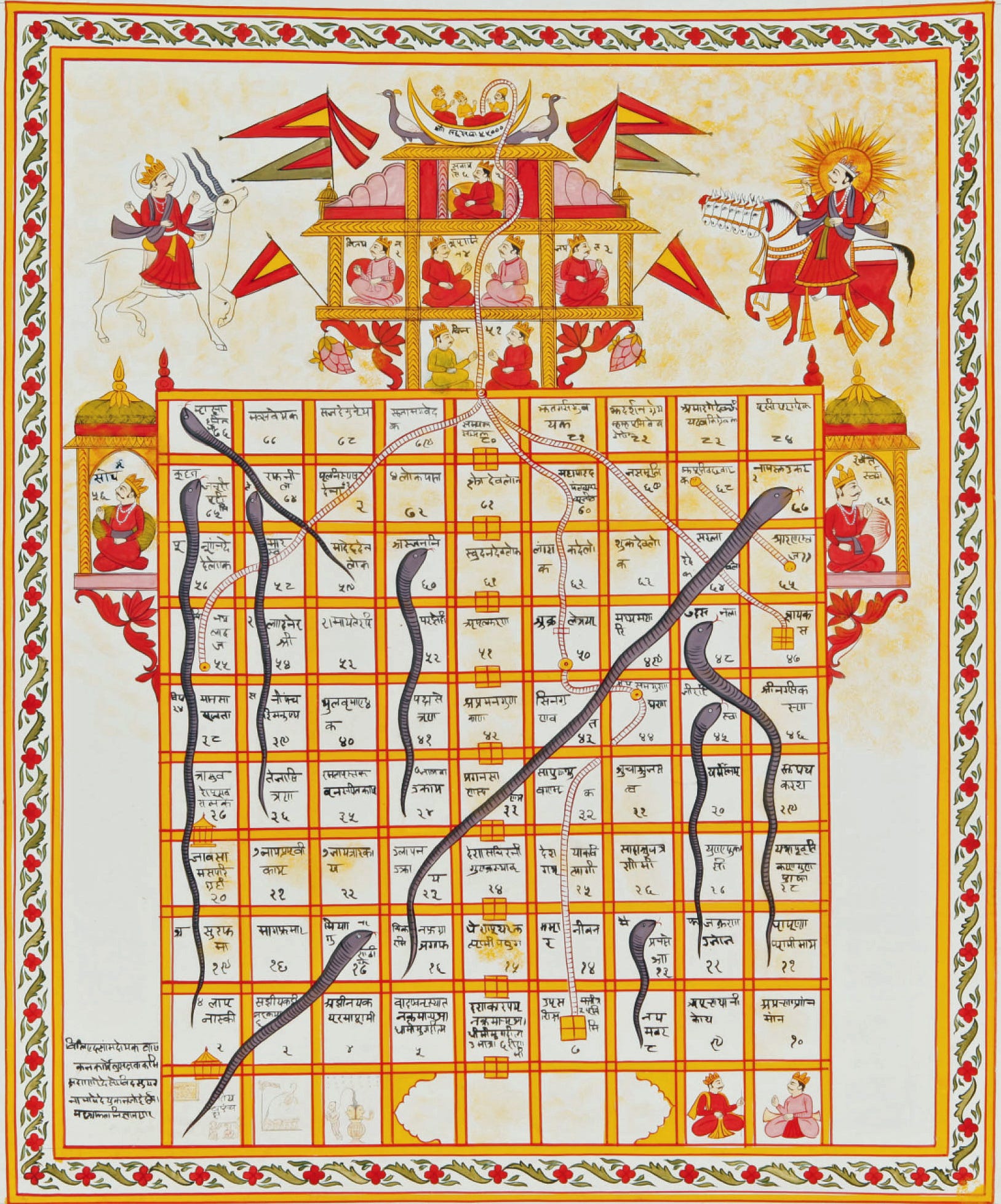
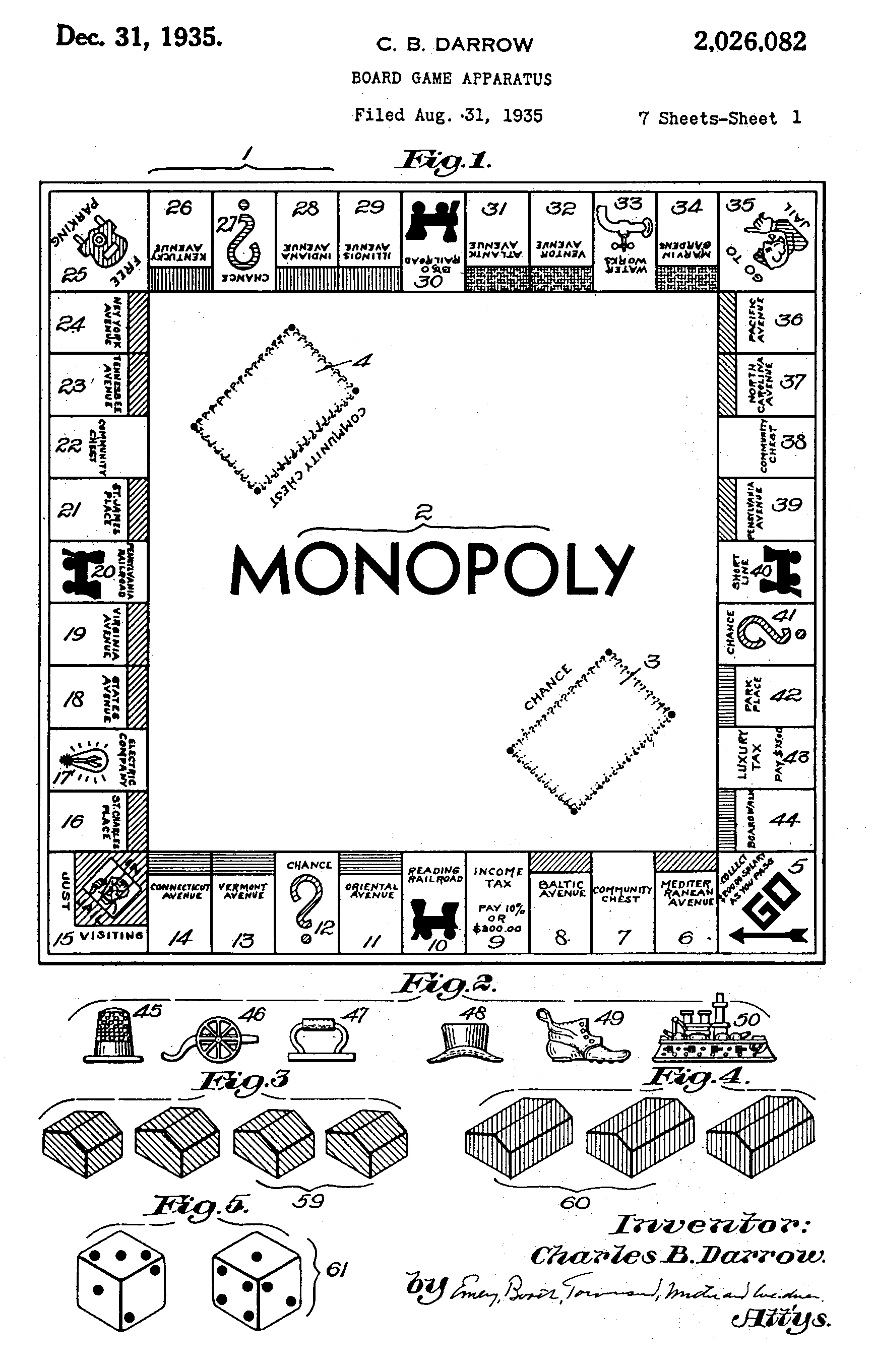
When a game has a theme, whether that’s a journey through the underworld, the karmic cycle or property-trading in Atlantic City or London, it can start to teach lessons. Many people first encounter mortgages, loans and taxes in Monopoly, a game that was originally devised as a demonstration of the unfairness of the rental property market and how money moves towards those who already have it. You may not think about that as you play, but you experience it through the gameplay. In Monopoly, as in many games, there will be one winner and several losers. With some games, the best way to win is not to play... or to find a new way of playing.
Playing to learn
Wargames, used extensively today for training and planning by military forces around the world, arose out of the Prussian army around 1780. A little over a century later they were introduced to the British public by H G Wells in his book Little Wars, which included a complete set of rules for Edwardian families to play using the toy soldiers their sons probably already had. “You have only to play at Little Wars three or four times to realise just what a blundering thing Great War must be,” Wells concluded. A year later World War One broke out, and the public appetite for war games went away for a while.
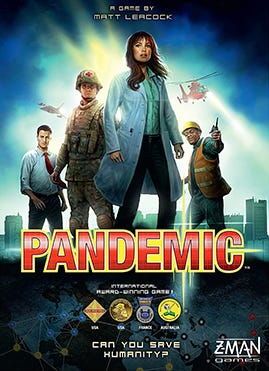
It doesn’t always happen that way. As Covid lockdowns hit in 2020 sales of the board game Pandemic, a brilliant co-operative game of eradicating deadly plagues across the planet, exploded. Two years later they collapsed, leaving the publisher with warehouses full of copies.
Games can help us learn to solve puzzles or understand difficult questions, but most often they’re an escape, a way to put everyday concerns aside for a few minutes or hours and just play, losing ourselves in safe conflicts with foes who we know are really friends. Games are the great equaliser: around the board everyone is at the same level, nobody is naturally stronger or richer or better connected, or any other unfair advantage.
Co-operative games, which have boomed in the last two decades, take that a step further: the players work together to beat the game, and as they do they build a rapport, an empathy, an understanding of how the other players work, and how to work with them for mutual success. Some modern games like Hanabi limit the amount of communication between players; others like The Mind forbid the players from speaking at all, and create a sense of almost paranormal connection between the group. Twelve thousand years from the first games, we are still finding new ways to use dice and counters to build bonds, challenge our friends and ourselves, and have fun.
From zero to Se!ze
Se!ze, the game we created with Charles Leclerc, doesn’t do all of those things – no one game could – but it’s informed by them. It’s a two-player game on a checkerboard, with roots in chess, draughts, the Viking game tafl and a hint of Mario Kart, but it’s designed to be quicker to learn and faster to play than its ancestors. Designed with Charles’ driver number in mind, sixteen pieces start in the middle of the board and much like racing the players are in conflict from the first move. It also incorporates modern ideas like power-ups: the pawn-like ‘guard’ pieces can gain new abilities to move like rooks and bishops from chess. It demands attention and focus but it’s not a brain-burner.
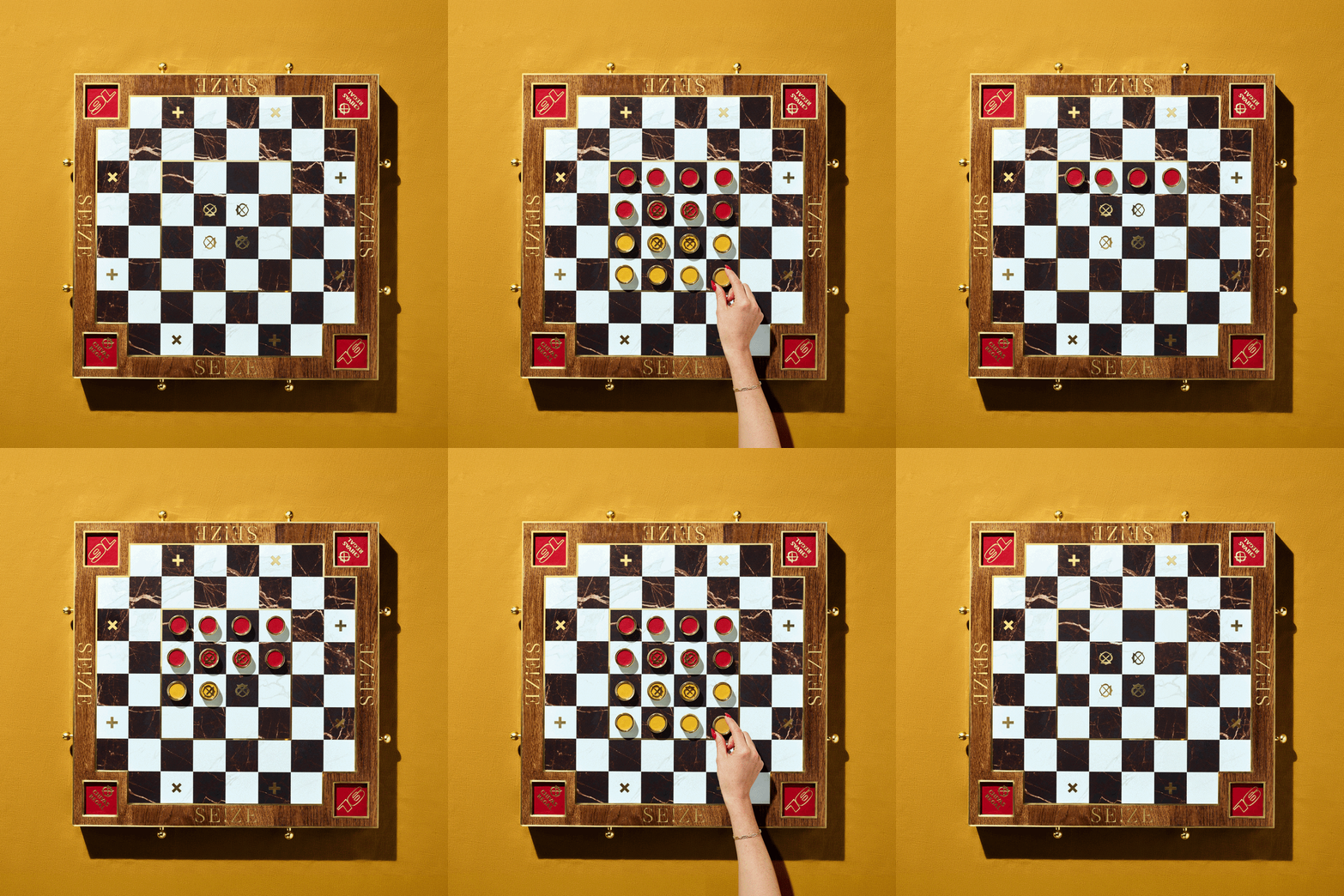
Only time will tell where Se!ze will travel, but the journey from the first conversation with Leclerc, through sketched ideas in the courtyard of the British Museum, leading to three possible designs and playable prototypes, a selection, months of testing and evolving the rules with game designers and experts, and a final version with board and pieces rendered in marble, walnut and brass, has led to something that you could have shown to H G Wells, or the Indian inventor of Moksha Patam, or Ovid, or Tutankhamun. And because games are timeless and universal they would instantly recognise what it was, and could learn the rules in a few minutes, and play, and probably give you a good match.
Be careful with Ovid, though. He’s handsy.
James Wallis is a game designer, critic and historian. He is the author of Everybody Wins (Aconyte, 2022) and the executive director of Big Table, the trade body for the tabletop games industry in Britain and Ireland.